Stablecoin Payments Reach $482 Billion As Token Supply Barely Grows

A new payments dataset offers a useful correction to the idea that stablecoin growth must be measured by how many tokens are in circulation. The stock of digital dollars has barely moved this year, but the amount being used for payments has climbed sharply.
TL;DR: Allium estimates $482 billion in identifiable stablecoin payments through September 2026, up 45% from the comparable period. Stablecoin supply grew only 0.4% to roughly $305 billion.
The analytics firm’s October 15 research counted about 1.04 billion payment transactions across the first nine months, a 71% rise. That means the increase is not simply a handful of larger transfers distorting the total. More transactions are taking place, and the average payment has become smaller.
The figures are filtered to reflect payment activity rather than every on-chain movement. That matters when raw stablecoin transfer totals can be dominated by exchange arbitrage, transfers between a company’s own wallets or automated trading. The $482 billion estimate is not intended to represent all stablecoin transactions.
Payment companies have been connecting familiar card and banking systems to blockchain rails, reducing the need for businesses or customers to interact with crypto-specific tools. Allium’s report suggests this infrastructure is beginning to change usage patterns, even with supply essentially flat.
There are limits to what the numbers prove. Volume is not profit, nor does an active token necessarily reflect durable consumer adoption. But a market where existing coins turn over more often is different from one dependent on continuous new issuance. For payment providers, that distinction is becoming increasingly important.
Written by the News Desk and edited by Samuel Rae.
Related stories
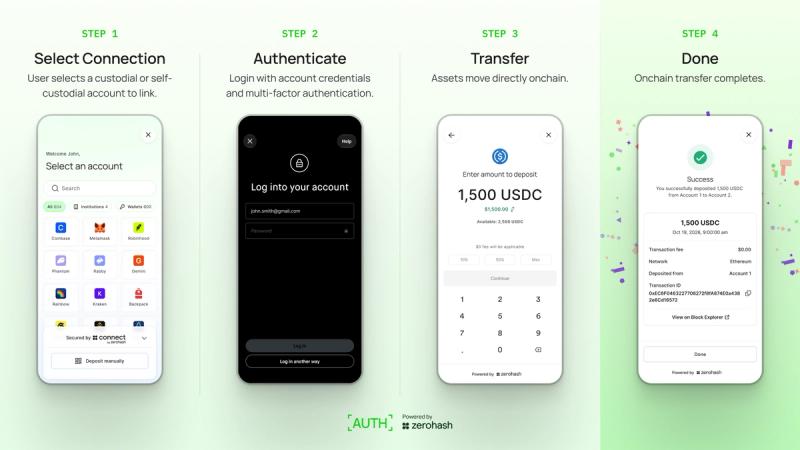
Zerohash rolls out a new tool to move crypto without copying wallet addresses

Crypto Hacks Cost $1.18 Billion In Q3 As Smart Contract Exploits Surge

Ledger Reseller Attack Raises Questions About Hardware Wallet Supply Chains
